

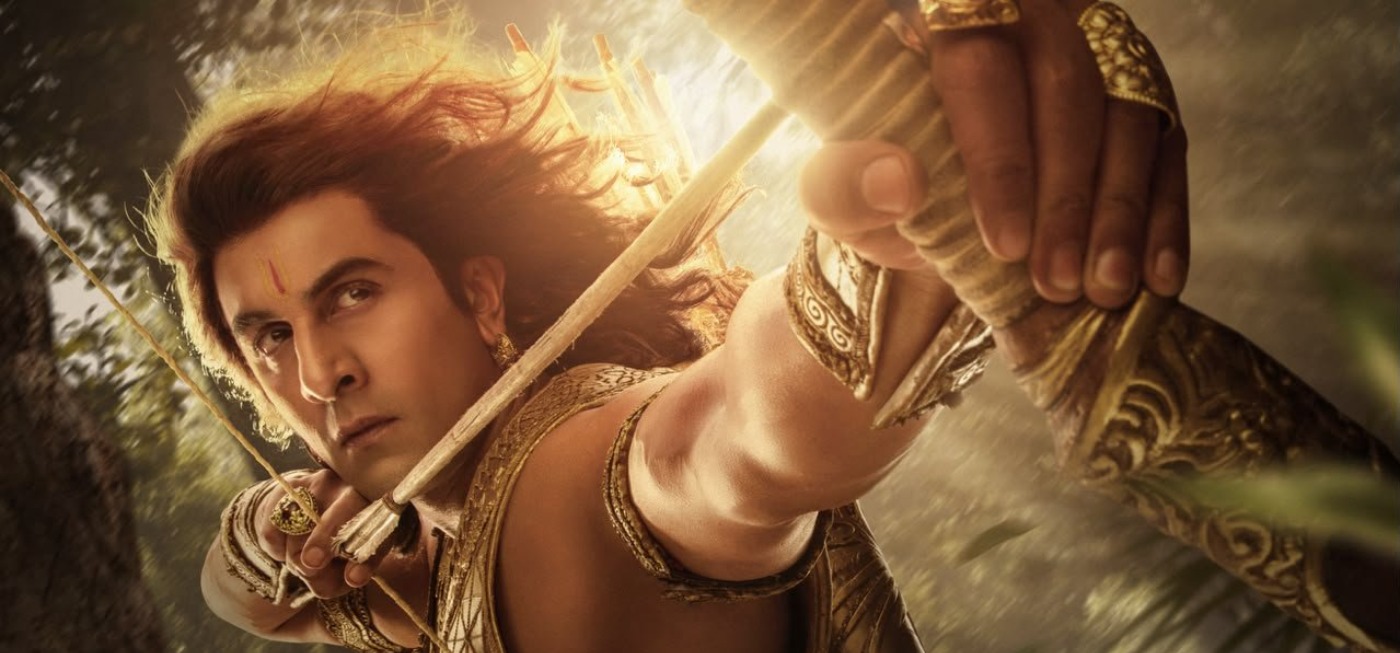
A familiar epic gets an ambitious cinematic makeover
There may be few stories more challenging to adapt for Indian audiences than the Ramayana.
The story is already deeply embedded in Indian culture, with generations growing up with different versions of its characters, events and moral themes.
That makes Ramayana Part 1 an unusually ambitious cinematic project.
Directed by Nitesh Tiwari, the film brings together Ranbir Kapoor as Ram, Sai Pallavi as Sita and Yash as Ravana. Rather than presenting the epic as a conventional historical or mythological drama, the filmmakers have attempted to build a large-scale cinematic universe around it.
The early critical response suggests that the ambition largely works.
The biggest strength is spectacle
The most consistent praise for Ramayana Part 1 has been directed toward its scale.
The Times of India gave the film 4.5 out of 5, calling it an extraordinary cinematic spectacle.
The Week similarly praised the film’s ambition and described the visual experience as a major achievement for Indian cinema.
The film clearly wants audiences to experience the Ramayana on a massive canvas.
That ambition can be seen in its visual effects, production design, battle sequences and presentation of the epic world.
For viewers accustomed to seeing the Ramayana through television adaptations, theatre plays and earlier films, the scale represents a significant change.
Ranbir Kapoor carries the emotional centre
Ranbir Kapoor’s portrayal of Ram is arguably the film’s most closely watched performance.
The role requires restraint rather than the conventional swagger associated with a commercial action hero.
Kapoor’s performance therefore works best when the film allows the character’s emotional and moral dimensions to come forward.
The expectations surrounding the role are also unusually high because Ram is not simply another fictional protagonist.
The performance has to satisfy audiences who already have strong ideas about the character while remaining part of a modern cinematic interpretation.
Yash brings intensity to Ravana
Yash has one of the film’s most demanding roles.
Ravana needs to appear powerful enough to stand opposite the central hero while retaining complexity beyond a straightforward villain.
The early response has been particularly positive toward Yash’s screen presence.
His performance gives the film a strong dramatic counterweight to Kapoor’s portrayal of Ram.
The contrast between the two characters also becomes one of the film’s key theatrical attractions.
Sai Pallavi adds emotional depth
Sai Pallavi’s portrayal of Sita provides another important emotional dimension.
Her character is central to the story’s human stakes, and the performance has to work within a narrative dominated by larger-than-life characters and visual spectacle.
The film benefits when it slows down enough to allow these relationships to breathe.
That emotional grounding prevents the movie from becoming only a collection of large action sequences.
The Jatayu sequence stands out
Among the film’s major sequences, the Jatayu episode has received particular attention.
Hindustan Times highlighted the sequence while also praising the performances of Ranbir Kapoor, Yash and Sai Pallavi.
The sequence demonstrates what the film can achieve when visual effects, emotional storytelling and character stakes work together.
It is in moments like these that the production’s enormous scale feels justified rather than merely expensive.
Where the film loses momentum
The principal criticism concerns pacing.
The first half has been described as slower than the later portions of the film.
This is a significant issue because audiences already know the broad trajectory of the story.
Unlike a conventional thriller, Ramayana Part 1 cannot rely on uncertainty about what happens next.
The screenplay therefore needs to create tension through character development, emotional conflict and the way familiar events are presented.
When the pace slows too much, the familiarity of the story becomes more noticeable.
Music receives a mixed response
The musical score is another area where critical opinion has been less unanimous.
The film brings together internationally recognised composer Hans Zimmer and Indian music maestro AR Rahman, creating enormous expectations before release.
While the music contributes to the epic atmosphere, some reviews have suggested that portions of the score do not always feel as distinctive as the film’s visual presentation.
That contrast is important.
The visuals set an exceptionally high standard, meaning every other department is naturally judged against them.
The verdict
Ramayana Part 1 succeeds most strongly as a cinematic experience.
Its greatest achievement is scale: the film treats one of India’s oldest and most familiar stories with the ambition normally associated with international fantasy cinema.
Ranbir Kapoor, Yash and Sai Pallavi provide the emotional foundation, while the production design and major sequences deliver the spectacle.
The first half could have moved faster, and the music does not consistently match the impact of the visuals.
But those weaknesses do not erase the film’s central achievement.
Final verdict
A visually ambitious and emotionally grounded epic that raises the scale of Indian mythological cinema, even if its pacing occasionally slows the journey.
For audiences looking for a large-screen experience, Ramayana Part 1 is clearly designed to be seen in theatres rather than reduced to a small-screen viewing experience.


